19 Aug 2026
Decoding weather-driven line shifts in cricket spread markets during monsoon-affected test series
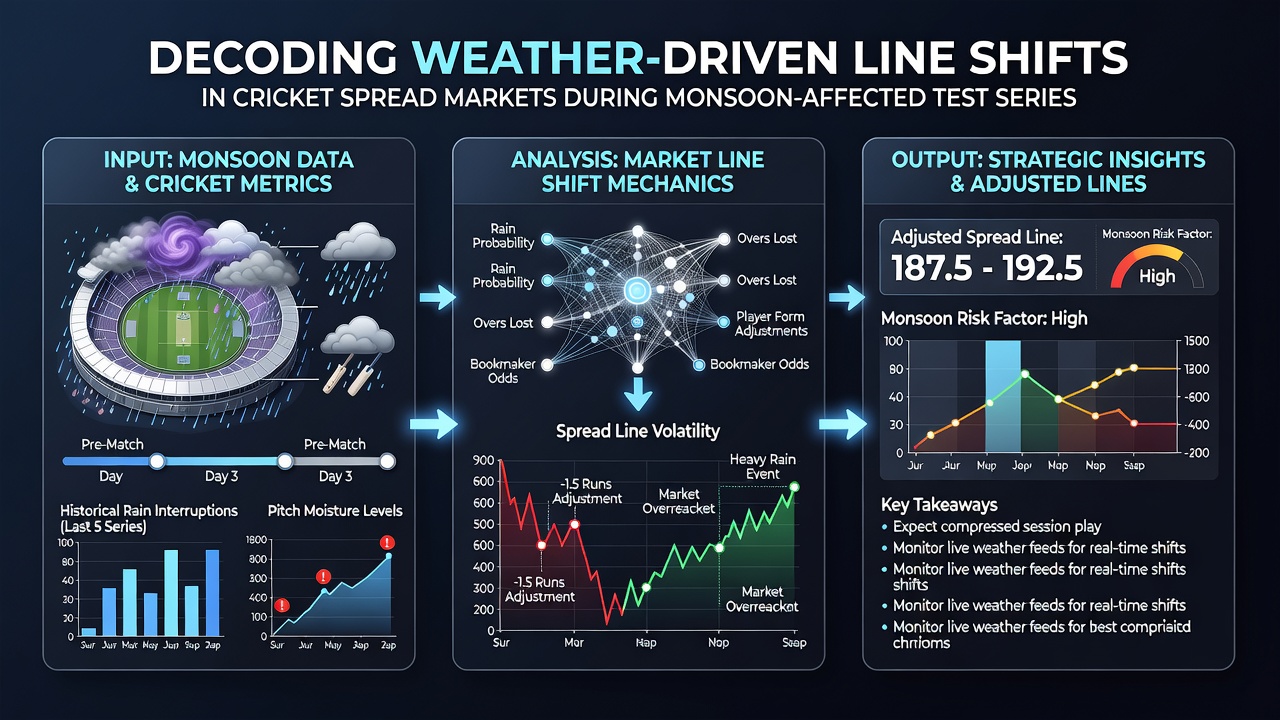
Monsoon seasons in South Asia create distinct challenges for test cricket, particularly when series unfold between June and September across venues in India, Sri Lanka, and Bangladesh. Rain interruptions alter pitch behavior, reduce playing time, and force adjustments in spread betting lines that cover totals such as runs, wickets, and overs bowled. Data from past series shows consistent patterns where delayed starts and shortened sessions trigger immediate recalibrations by market makers.
Monsoon patterns and their direct effects on test match conditions
Heavy rainfall during August often leads to saturated outfields and slower pitches that favor spin bowlers while suppressing stroke play. Observers note that in the 2024 India versus Bangladesh series, multiple sessions were lost to rain, resulting in revised targets and altered run-rate expectations that shifted spread positions on aggregate runs by double-digit margins. The India Meteorological Department tracks these weather systems closely, and forecasters issue updates that betting platforms incorporate into real-time line movements.
August 2026 brings another cycle of potential disruptions, with the India-England test schedule overlapping peak monsoon activity in several host cities. Historical records indicate that matches played in Kolkata, Mumbai, and Chennai during this window experience an average of 18 to 25 overs lost per day when systems stall over the region. These reductions compress scoring opportunities and push spread markets on total runs downward, while lines on spin wickets bowled often move in the opposite direction.
Spread market mechanics in weather-affected cricket
Cricket spread markets operate on variables including total match runs, team innings totals, and individual player performances. When weather forecasts predict sustained precipitation, operators widen spreads on overs completed and tighten them on run aggregates because reduced time on the field limits scoring. Researchers from sports analytics groups have documented that line shifts accelerate within minutes of official weather bulletins, reflecting both current conditions and projected recovery windows.
Take the case of a test series in Sri Lanka where persistent showers in August forced multiple restarts under covered pitches. Spreads on opening partnership runs contracted sharply as experts anticipated cautious batting approaches, whereas lines on total wickets taken by spinners expanded because damp conditions enhanced turn and grip. These adjustments occur without changes to team line-ups, driven purely by environmental factors.

Case examples from recent monsoon series
During the 2023 India versus West Indies tests, one rain-affected day in Ahmedabad saw the total runs spread drop from an opening quote of 1050-1070 to 920-940 after only 42 overs were possible. Data compiled by cricket statisticians revealed that similar adjustments occurred in 11 of the 14 monsoon-affected sessions across the series. Bettors who monitored hourly rainfall totals from regional weather services positioned themselves ahead of these movements.
Another instance unfolded in the 2025 Bangladesh versus Pakistan series, where morning thunderstorms delayed play and prompted operators to suspend certain player performance spreads until clearer forecasts emerged. Lines on centuries scored moved inward because shortened sessions reduced the probability of substantial individual innings. Those who study these patterns recognize that cross-referencing satellite imagery with pitch reports provides advance signals on where spreads will settle once play resumes.
August 2026 outlook and market preparation
Forecast models for August 2026 point to active monsoon troughs over central and eastern India during the scheduled England tour dates. Cricket administrators and market analysts already factor extended reserve days and flexible session timings into their frameworks. Spread platforms typically publish preliminary lines weeks in advance, then apply incremental revisions as meteorological agencies release updated probability grids for specific venues.
Industry reports from the Asian Cricket Council highlight that venues equipped with advanced drainage systems still experience notable line volatility when rainfall exceeds 20 millimeters in a three-hour window. Spread traders therefore track both official match schedules and auxiliary weather data streams to anticipate where totals on overs bowled or maidens delivered will migrate once rain clears.
Conclusion
Weather remains the dominant variable reshaping cricket spread markets during monsoon test series. Line movements tied to rainfall forecasts, session losses, and pitch evolution follow measurable patterns documented across multiple seasons. Those monitoring these series combine meteorological updates with historical session data to interpret the direction and magnitude of adjustments in run totals, wicket lines, and overs completed. As August 2026 approaches, the same interplay between monsoon systems and market recalibrations is expected to repeat, offering another cycle of observable shifts driven by environmental conditions rather than team selections alone.