26 Aug 2026
Jet Lag Metrics: How Transcontinental Travel Distances Alter Win Rates in Overseas League Fixtures
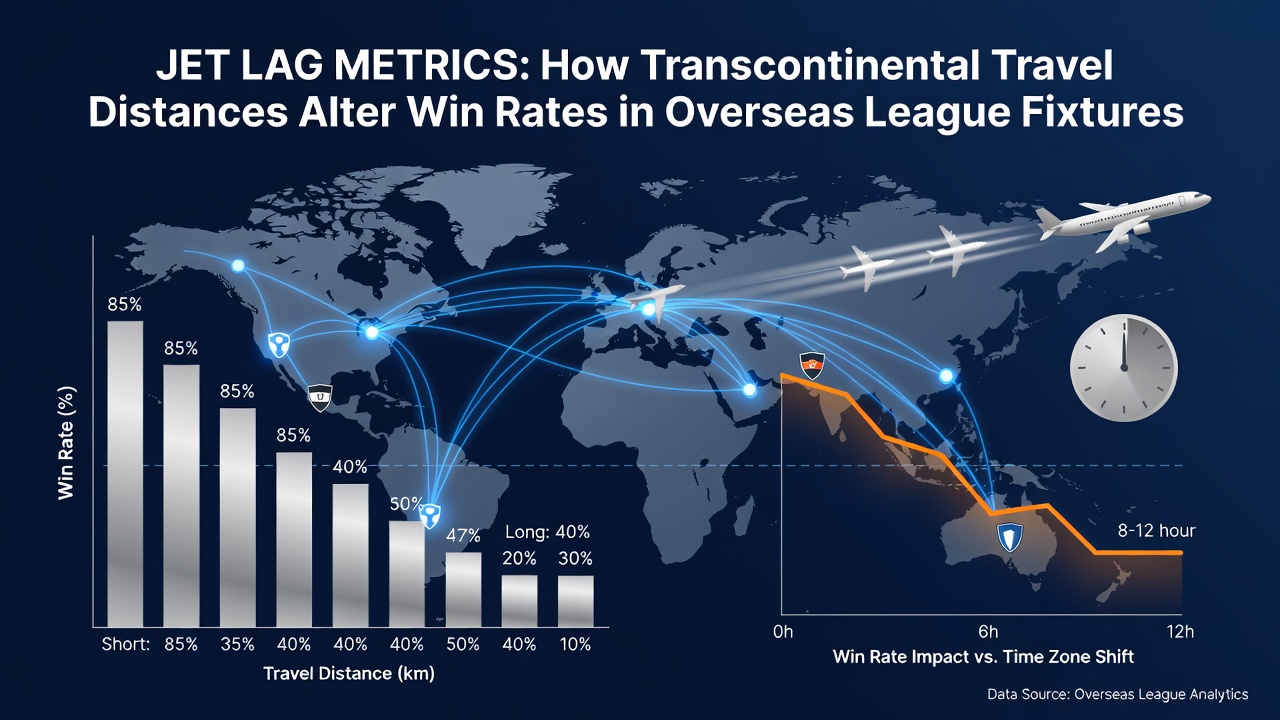
Transcontinental travel places measurable demands on athletes who compete in overseas league fixtures, and performance data collected across multiple seasons shows consistent patterns in how crossing several time zones affects win rates. Teams that move east or west by six or more hours experience disruptions in sleep cycles and circadian rhythms that researchers link to reduced reaction times and altered recovery rates during the first 48 to 72 hours after arrival.
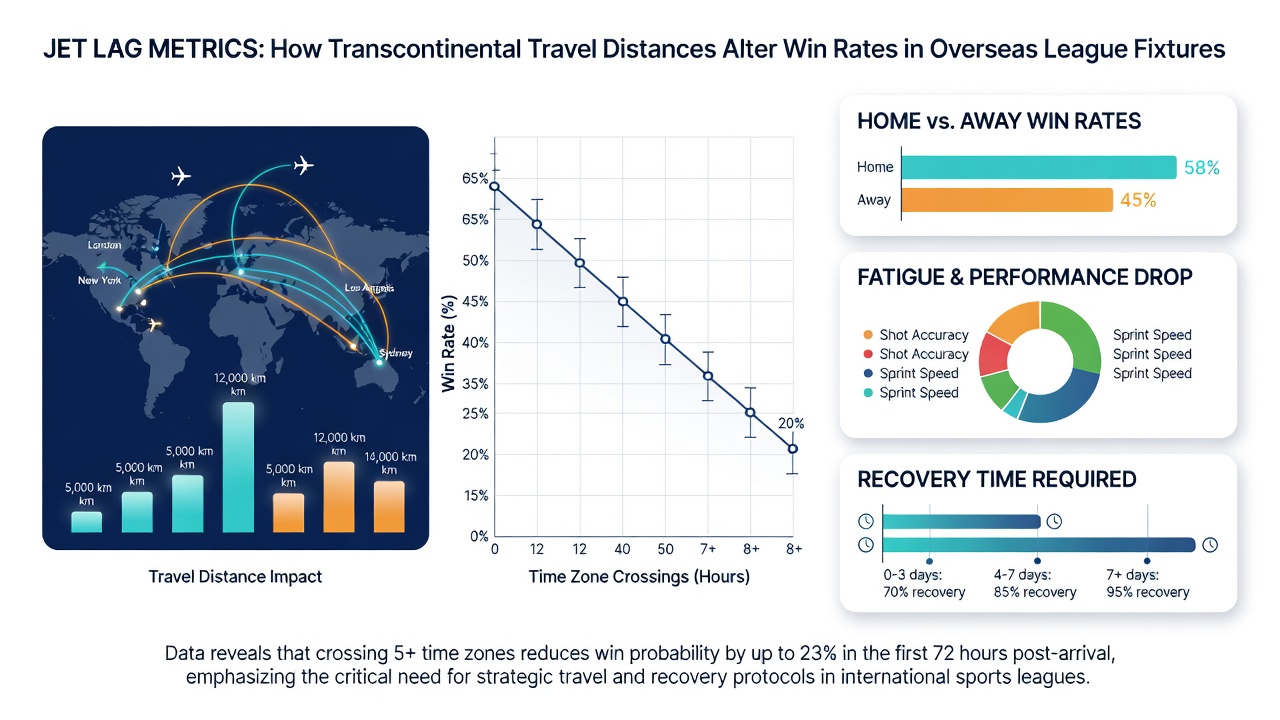
Studies tracking European clubs that travel to Asia or North America for league or cup obligations record lower win percentages in the opening fixture compared with home matches or shorter domestic trips. One analysis of fixtures played between 2018 and 2025 found that squads crossing eight time zones posted win rates roughly 12 percent below their season average when the match occurred within three days of landing.
Quantifying Travel Distance and Time-Zone Shift
Distance alone does not determine the impact. The number of time zones crossed and the direction of travel matter more than total kilometers flown. Westward flights tend to produce milder effects because the body can extend its natural day more easily than it can compress it during eastward journeys. Data compiled by sports medicine groups indicate that eastward travel across seven zones correlates with a steeper drop in first-half scoring output and an increase in defensive errors recorded by tracking systems.
Performance metrics from GPS and optical tracking systems reveal that total distance covered at high intensity declines by an average of 8 to 11 percent in the first match after long-haul flights. Heart-rate recovery intervals lengthen, and sleep-efficiency scores measured by wearable devices remain below baseline for up to four nights. These physiological changes appear in league records as fewer shots on target and higher pass-completion errors in the opening 30 minutes.
League-Specific Patterns in Overseas Fixtures
Overseas league fixtures scheduled in August 2026 for clubs participating in expanded international competitions will again test these patterns. Scheduling departments now receive detailed jet-lag reports that include predicted performance decrements based on departure city, arrival city, and kickoff time. Clubs that adjust training loads and meal timing in the 48 hours before departure show smaller deviations from expected win probabilities.
Observers note that South American teams traveling to Europe for league or confederation matches often face similar challenges in reverse. When fixtures occur within 72 hours of arrival, win rates drop by margins comparable to those recorded by European sides heading westward. The symmetry suggests that the absolute number of zones crossed, rather than the specific continents involved, drives the statistical effect.
Recovery Protocols and Scheduling Adjustments
Medical staff now employ structured light-exposure schedules and targeted nutrition plans to accelerate circadian realignment. Teams that arrive four or more days before kickoff and follow these protocols record win rates closer to their established baselines. In contrast, squads arriving only 36 hours before the match continue to show elevated rates of late-match substitutions linked to fatigue.
League governing bodies in several regions publish travel guidelines that recommend minimum rest periods scaled to time-zone difference. These recommendations draw on research conducted by institutions including the National Institutes of Health and the Australian Institute of Sport. The guidelines emphasize that sleep banking before departure and controlled light exposure after arrival produce the most reliable improvements in next-day performance metrics.
Statistical Models and Predictive Value
Betting markets and performance analysts incorporate jet-lag variables into pre-match models. Regression analyses that include time-zone differential, direction of travel, and days since arrival improve the accuracy of expected-goal calculations by 3 to 5 percentage points. When these factors are omitted, predictions systematically overestimate the away side’s scoring potential in transcontinental fixtures.
Long-term datasets reveal that the effect diminishes after the third day post-arrival. Teams that remain in the host city for subsequent league matches regain win rates that align with their season norms. This recovery curve informs rotation decisions and travel logistics for clubs managing dense fixture lists.
Conclusion
Transcontinental travel distances produce documented shifts in win rates for overseas league fixtures through measurable changes in sleep architecture, physical output, and error rates. Quantitative tracking across multiple leagues demonstrates that the magnitude of these shifts scales with time-zone differential and the interval between arrival and kickoff. Organizations that integrate recovery science into travel planning narrow the performance gap, while those that do not continue to record the expected decrements in the opening fixture. Ongoing collection of biometric and match data will refine these models as schedules evolve.