20 May 2026
Tracing Win Probability Adjustments in Major Esports Leagues Through Live Data Integration
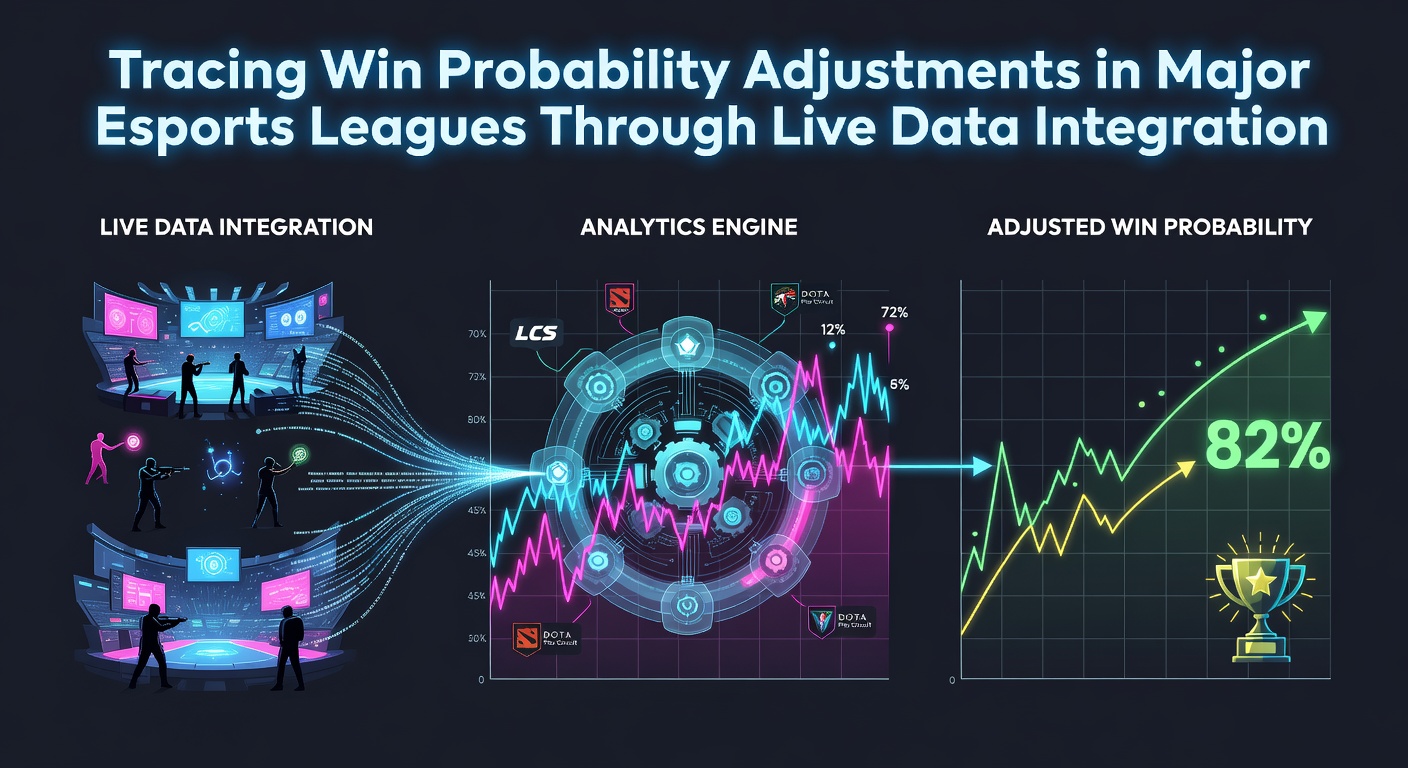
Esports leagues have integrated live data feeds to adjust win probabilities in real time across competitions such as League of Legends, Counter-Strike 2, and Valorant circuits, and these systems pull metrics directly from game servers while analysts monitor shifts that occur mid-match. Teams in the LPL and LCS regions adopted standardized APIs by early 2025 that allow continuous updates to probability models based on player positioning, resource accumulation, and objective control, while similar frameworks expanded into Valorant Champions Tour events during the spring split of 2026.
Core Components of Live Data Pipelines
Modern pipelines combine server-side telemetry with third-party overlays that capture events at intervals as short as 100 milliseconds, and researchers at institutions including the University of Melbourne have documented how these streams feed into Bayesian updating algorithms that recalculate team victory chances after each round or objective. Data points such as damage dealt per minute, vision score differentials, and economy states trigger immediate revisions, whereas static pre-match models remain unchanged until the first blood or tower falls. Observers note that leagues in North America and Europe synchronized their data standards through joint technical working groups in late 2025, which reduced latency gaps between regions and enabled cross-league comparisons during international tournaments scheduled for May 2026.
Adjustments Observed in Major Leagues
During LPL regular season matches, win probability swings often exceed 30 percentage points within a single dragon fight, and these movements are logged automatically through integrated dashboards that broadcast adjustments to viewers and coaching staffs simultaneously. In the LCS, analysts track similar volatility during mid-lane skirmishes where gold differentials reverse expectations, while Valorant matches demonstrate even sharper corrections after plant or defuse scenarios because round-win models incorporate bomb timer data and agent utility usage. Figures from the Esports Integrity Commission reveal that over 85 percent of professional series in 2025 featured at least one probability reversal exceeding 20 points, with peak volatility recorded during best-of-five grand finals.
Technical Integration Across Platforms
League operators connect directly to game engine exports that deliver structured JSON packets containing positional coordinates, health values, and cooldown timers, and these packets route through secure cloud instances before reaching probability engines maintained by data partners. Machine learning layers trained on historical match corpora refine the base models each week, and updates deployed in April 2026 incorporated new variables for agent-specific win rates in post-plant situations. A study published by the Canadian Centre for Gaming Research examined integration latency across three continents and found average delays under 250 milliseconds when fiber connections link venue servers to central processing nodes, although regional differences persist in markets with less developed infrastructure.
Impact on Broadcast and Analysis Workflows
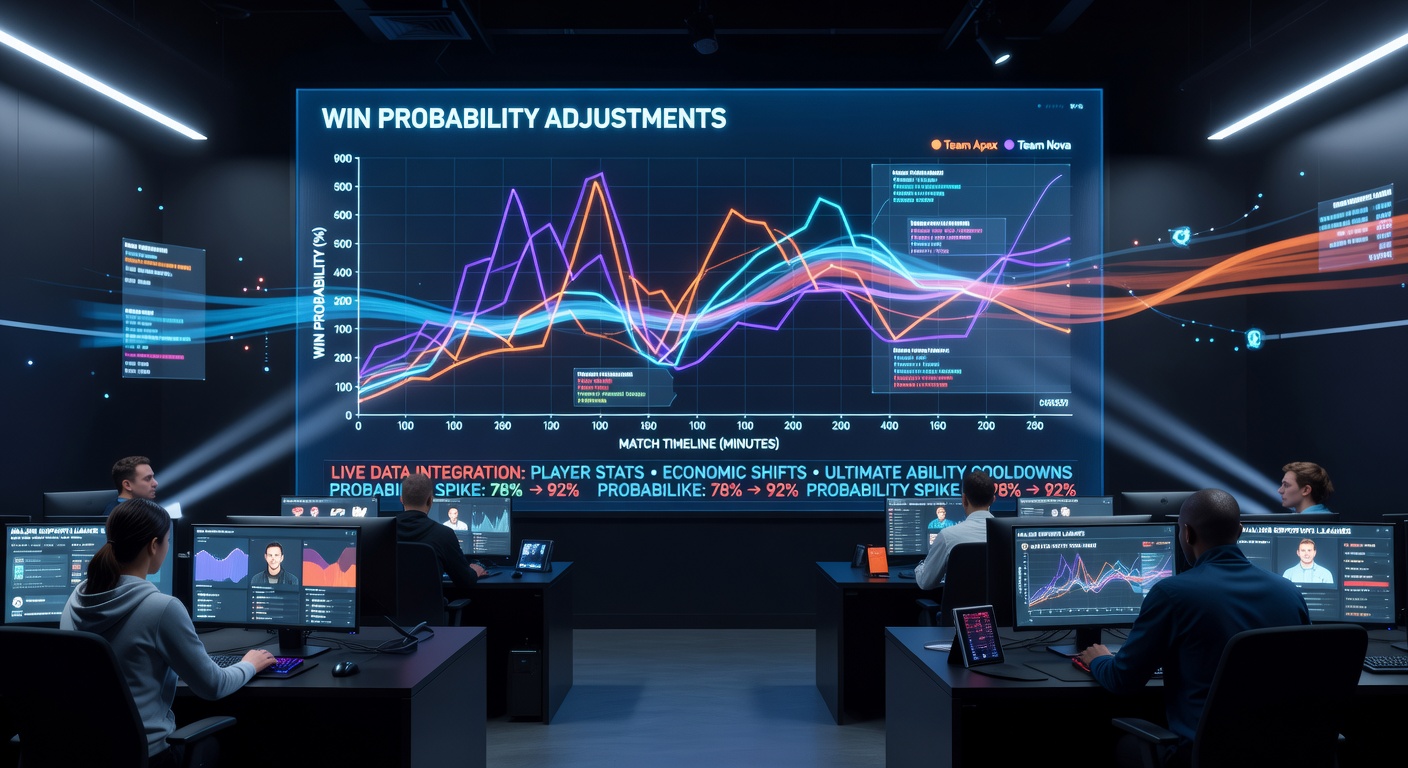
Broadcast productions overlay dynamic probability graphs that update after every significant event, and production teams receive alerts when models detect anomalies such as unexpected economy leads or vision denials. Commentators reference these shifts during play-by-play segments, while coaches access private instances that isolate individual player contributions to the overall swing. Data from the Australian Esports Federation indicates that viewer engagement metrics rose 22 percent on streams displaying live adjustments during the 2025 Pacific Championship Series, with peak interaction occurring around mid-match turning points.
Future Developments Scheduled for 2026
League executives plan to introduce multi-game probability tracking for franchise tournaments set to begin in May 2026, allowing cumulative series win chances to adjust based on map-specific outcomes and player substitution patterns. Integration with wearable biometric sensors remains under evaluation in select European circuits, where heart rate and reaction time data could supplement existing mechanical statistics once privacy frameworks receive final approval. Industry reports compiled by the International Esports Federation project that standardized live data protocols will cover 95 percent of Tier-1 events by the end of the year, extending current capabilities in Asian and North American markets to emerging regions in Latin America and Southeast Asia.
Conclusion
Live data integration has established traceable records of win probability adjustments across major esports leagues, and these systems continue to evolve through coordinated technical standards and expanded data sources. Continued refinement of pipelines supports more precise modeling while maintaining the transparency that broadcasters, teams, and regulatory bodies require for ongoing competition integrity.