28 Jun 2026
Weather Driven Adjustments in NHL Over Under Markets for Stadium Series Contests
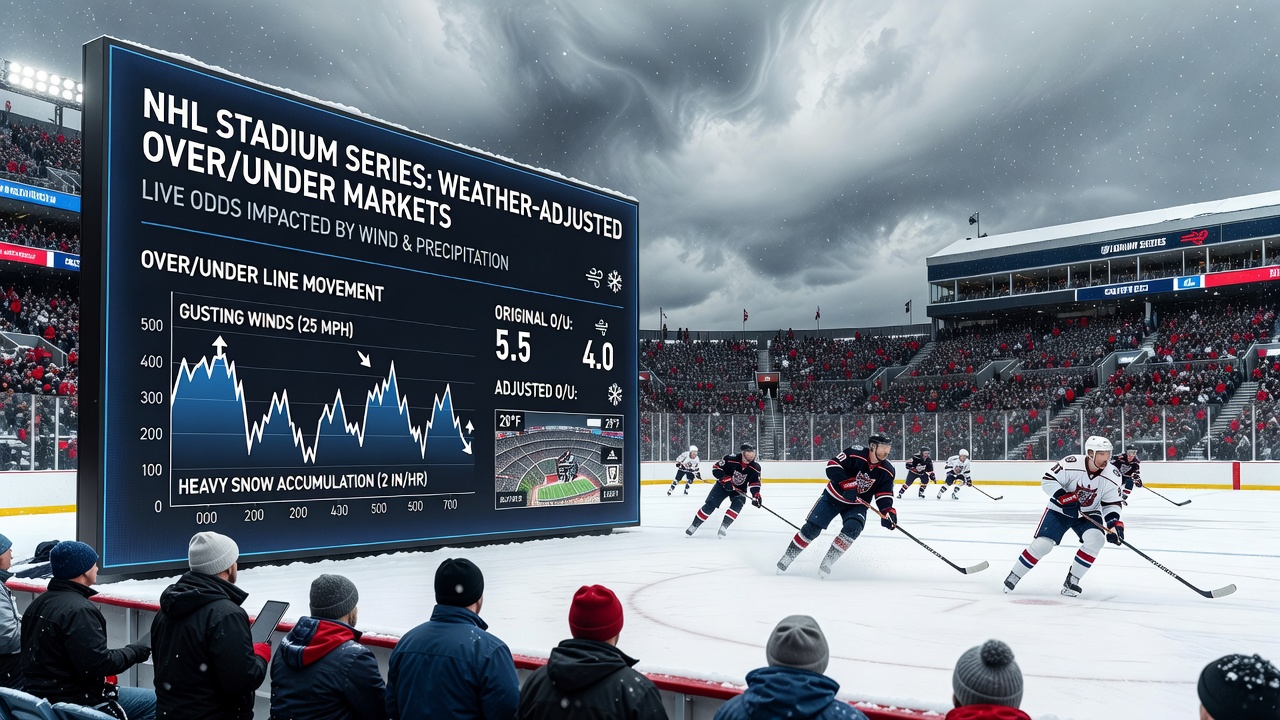
Stadium Series contests bring NHL action outdoors where temperature, wind, and precipitation directly shape game dynamics and force sportsbooks to recalibrate over under totals. Observers note that these environmental variables alter puck speed, goaltender equipment performance, and overall scoring rates in ways indoor arenas rarely replicate. Data from multiple outdoor games shows average goals per contest often drop below regular season norms when temperatures fall below freezing, prompting linesmakers to shade totals downward based on forecasts released days ahead of puck drop.
Key Weather Variables Affecting Play
Temperature stands out as the primary driver because colder air stiffens sticks and slows rubber pucks while also impacting the ice surface itself. Wind adds another layer by pushing shots off course or helping them sail past screened goalies, and light snow or rain can create slush that clogs skate blades and reduces passing accuracy. Studies from the National Oceanic and Atmospheric Administration indicate that sustained winds above 15 mph correlate with measurable declines in even strength shot attempts during open air events. Those who've tracked historical box scores find that games played in sub zero wind chill conditions produce fewer high danger chances compared with milder 30 degree outings.
Historical Scoring Patterns in Outdoor Settings
Records from past Stadium Series and Winter Classic matchups reveal consistent downward pressure on totals when forecasts call for clear but frigid nights. One study revealed that contests held below 20 degrees Fahrenheit averaged 5.4 goals while games above 35 degrees climbed closer to 6.2. Power play efficiency also dips because players struggle to maintain grip on sticks and execute crisp zone entries. Observers note these trends hold across multiple venues from Soldier Field to Heinz Field, although roofed stadiums with open ends introduce variable wind tunnels that complicate predictions further.
How Betting Markets Incorporate Forecasts
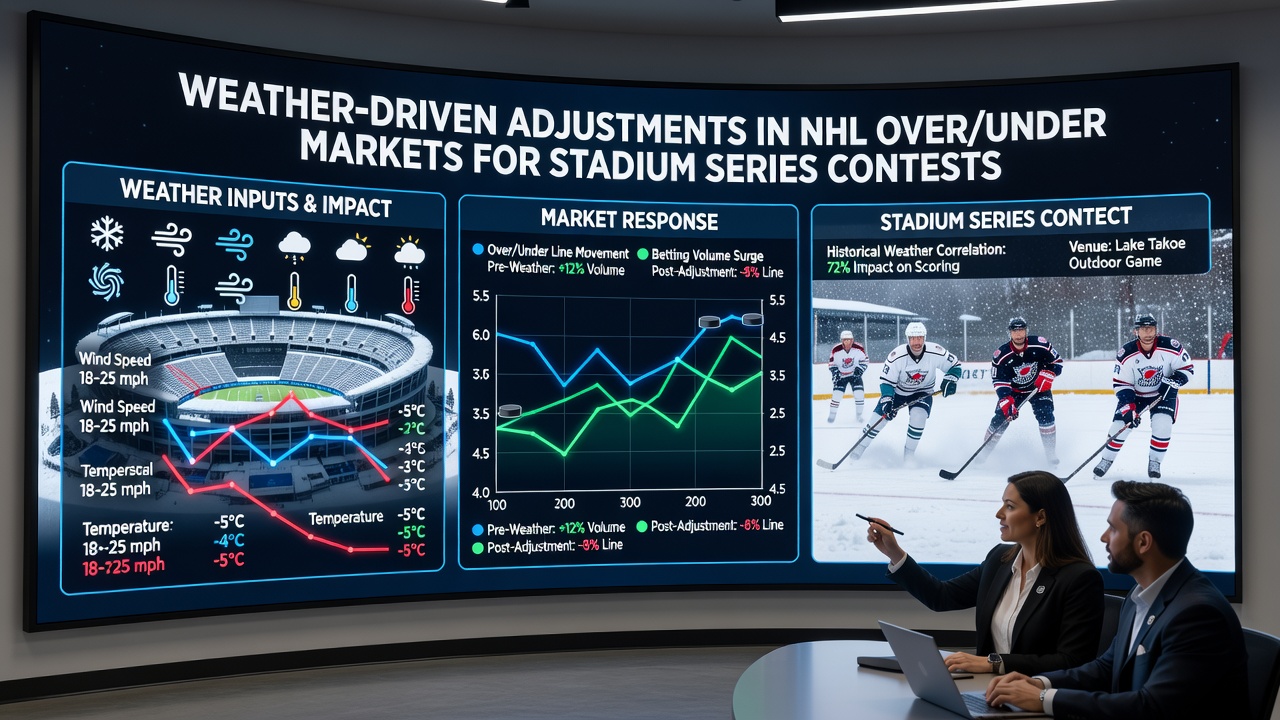
Oddsmakers monitor National Weather Service updates and adjust totals as early as 48 hours before faceoff, with sharper movement occurring once the 24 hour mark arrives. When models shift toward heavier precipitation or stronger gusts, under lines attract increased liability and sportsbooks respond by moving the number half a goal or more. Research indicates that sharp bettors often wait for these final adjustments rather than betting early totals because the last forecast revisions frequently produce the most reliable edges. Lines for the 2025 Stadium Series at MetLife Stadium opened at 6.5 before settling near 6 after colder projections emerged.
Regional Climate Considerations and Venue Specifics
Northern markets such as Buffalo and Detroit tend to feature more extreme cold while southern stops like Raleigh introduce higher chances of rain or fog that affect visibility and ice quality differently. According to Environment and Climate Change Canada reports on Great Lakes region events, lake effect snow bands have occasionally forced last minute total reductions when accumulation threatens to slow the surface. Venues with retractable roofs or partial enclosures still experience enough air exchange that totals markets treat them similarly to fully open stadiums during winter months.
Equipment and Player Adaptation Factors
Players adapt by selecting heavier sticks and adjusting skate sharpening, yet these modifications rarely offset all weather impacts on puck handling. Goalies report that leg pads become less flexible in extreme cold, slightly altering butterfly technique and reaction time. Data compiled by league statisticians shows save percentages rise marginally in outdoor settings when temperatures remain below 25 degrees, further supporting the case for lower goal expectations. Those analyzing player tracking data note reduced skating speed and fewer zone transitions under windy conditions regardless of team identity.
Future Outlook for Market Modeling
Advanced weather integration models now combine ensemble forecasts with historical scoring databases to generate probability distributions for totals in each Stadium Series game. These tools help operators set more precise opening numbers and limit exposure once betting begins. As outdoor events continue on the schedule, the interplay between meteorological data and real time adjustments remains central to how over under markets function for these unique contests.
Conclusion
Weather continues to serve as a decisive input in NHL over under pricing for Stadium Series games because temperature, wind, and precipitation produce measurable effects on scoring that indoor environments do not replicate. Market operators rely on evolving forecasts and historical patterns to set and revise totals, while bettors who monitor these shifts gain access to updated information throughout the week leading to each event. The connection between atmospheric conditions and game outcomes remains a defining characteristic of outdoor hockey markets.